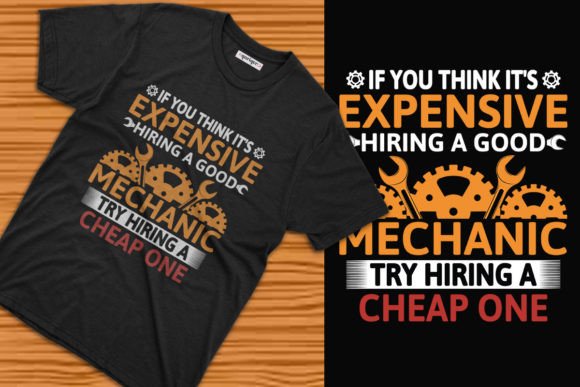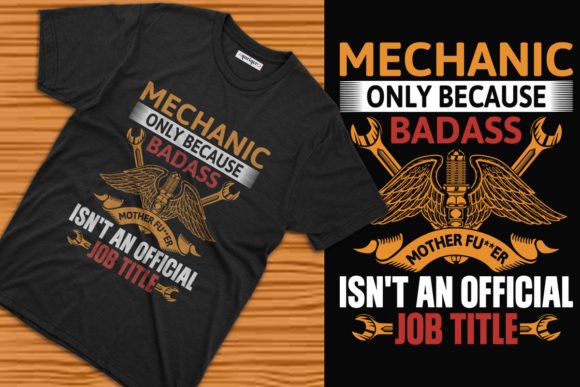
Mechanic Lifestyle T-shirt Design
First Impression: Bold, Grounded, and Ready for the Workshop
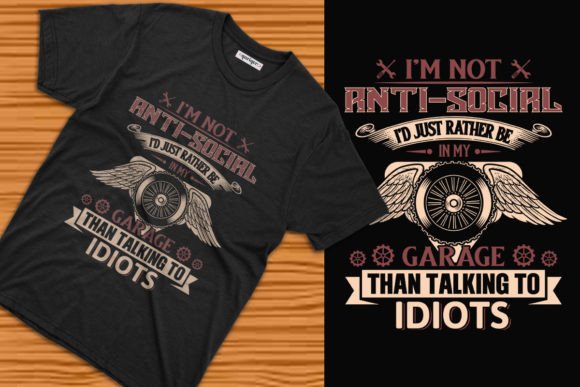
When I opened the Mechanic Lifestyle T-shirt Design file, I didn’t see just another “tool-themed” graphic—I saw a design with weight, intention, and quiet confidence. It’s not overly busy, but it’s not minimalist either. There’s a balanced rhythm in the layout: clean linework, purposeful negative space, and a central motif that reads instantly—wrench, gear, or stylized toolbox—without needing explanation. The typography feels grounded, slightly industrial but not harsh, with subtle texture that suggests screen-printed authenticity rather than digital sterility. As an embroidery designer, my first thought wasn’t “Will this stitch?” but “Where will this *belong*?” And the answer came fast: on a sturdy canvas tote for a local auto shop’s staff gift, stitched in charcoal gray thread on natural cotton duck.
Where It Shines: Real Projects That Feel Thoughtful
The Mechanic Lifestyle T-shirt Design works beautifully as a machine embroidery design for custom apparel where authenticity matters—not trend-chasing, but story-telling. I tested it on a midweight cotton sweatshirt for a small-town garage’s holiday giveaway. With moderate stitch density and open areas between elements, it embroidered cleanly without puckering, even on slightly textured fleece. On a denim apron for a mechanic-owned café, it held its shape across seams and pockets. As a tote bag design, it scaled well to 4.5" wide—large enough to read at a glance, tight enough to avoid excessive fill stitch buildup. For baby embroidery? I’d use only the central icon (no fine text) on a soft organic cotton onesie—stitched with lightweight stabilizer and low-density fill. As a patch, it pressed flat and retained crisp edges after washing. Even on tea towels and pillow covers, the design kept its visual authority without overwhelming the item’s function.
Why Customers Trust This Kind of Embroidery
Embroidered items carry unspoken cues: care, durability, intention. The Mechanic Lifestyle T-shirt Design supports that. Its clarity translates into stitching clarity—no ambiguous outlines or overlapping layers that blur under thread. That builds customer trust, especially for Etsy sellers offering personalized gifts or small shop owners branding merchandise. When someone receives a cap with this design stitched neatly above the visor, they don’t just see a logo—they sense craftsmanship. It reads as handmade product, not mass print. That perception lifts perceived value, encourages repeat orders, and strengthens brand consistency across your craft business.
Where to Proceed With Care
This isn’t a one-size-fits-all embroidery file—and that’s a strength, not a flaw. On stretchy fabric like performance tees or thin jersey, the design’s clean lines can distort if hooping isn’t precise or stabilizer isn’t layered correctly. On dark fabric, avoid light-colored thread unless you’re using a high-contrast underlay; test first. Curved surfaces—like the front panel of a structured cap—require careful digitizing adjustments; the original Mechanic Lifestyle T-shirt Design appears optimized for flat or gently contoured surfaces, so verify hoop size compatibility before stitching on headwear. Tiny lettering within the graphic? If present, treat it as running stitch territory—not satin stitch—and confirm legibility at 3" width. Dense fill areas (e.g., solid gear shapes) may need reduced density for breathability on baby embroidery or summer-weight garments.
Practical Notes Every Embroidery Designer Should Check
- Always test on scrap fabric first—especially with textured or blended fabrics common in custom apparel and boutique products.
- Review stitch density in your embroidery software. High density adds stiffness; low density risks thread breakage on dense fills.
- Confirm hoop size matches your intended placement—this design fits comfortably in a 4"x4" hoop, but pushing to 5"x7" may require re-digitizing fine details.
- Inspect small corners and joins. Does the wrench handle taper cleanly? Do gear teeth hold definition at 2.5" height? These details define professionalism.
- Test black-and-white mockups before finalizing thread colors—what reads bold on screen may vanish on heather grey or navy.
- Use proper stabilizer: cutaway for knits, tear-away for stable wovens, and fusible + tear-away for lightweight cottons used in nursery decor or kitchen towels.
- Verify licensing before selling finished products or digital embroidery files—especially if listing on Etsy or offering commercial embroidery services.
Not Just a Graphic—A Craft Business Asset
As a digital embroidery file, the Mechanic Lifestyle T-shirt Design earns its place in your design assets because it bridges utility and identity. It’s versatile enough for holiday embroidery (think trucker hats for Father’s Day), refined enough for wedding gifts (a groom’s personalized apron), and rugged enough for craft fair products like embroidered tool rolls or workshop blankets. Unlike generic clipart-style Graphics, this design carries mood and context—it doesn’t just say “mechanic,” it says “pride, precision, hands-on.” That resonance is what converts browsers into buyers, whether you’re a solo hobbyist making personalized gifts or a creative entrepreneur scaling a small shop product line.
Final Thought: Stitch It Where It Belongs
I won’t recommend the Mechanic Lifestyle T-shirt Design for every project—but I will recommend it where it lands with honesty. Use it on garments and home goods that earn their keep: aprons worn daily, totes carried to the garage, patches sewn onto jackets that last years. Let it anchor your printable mockups with integrity. Let it represent your craft business not as decoration, but as declaration. Because in embroidery—as in mechanics—the best work isn’t flashy. It’s functional, faithful, and built to last.